Plants that Attract Predatory Insects
Predatory Insectory Strips?
Reading Time: 5 minutes
by Leah Smith
Support a variety of pollinating insects, including those that parasitize and predate garden pests, by planting plants that attract predatory insects.
Pollinator plots offer food and nesting resources to a variety of pollinating insects, including native bees, butterflies, and moths. Honeybee pastures are concerned with maximizing the quantity, variety, and periods of availability of pollen and nectar sources for the “hive bee.” But insectary strips go further. They’re designed to support not only a variety of pollinating insects, but also those that parasitize and predate garden pests.
Insectary strips are strips of flowering plants used in agriculture and gardening to support beneficial insects such as pollinators and natural pest predators. These strips provide nectar, pollen, and habitat, which helps to increase populations of natural enemies and enhance biological pest control.
Duration and Location
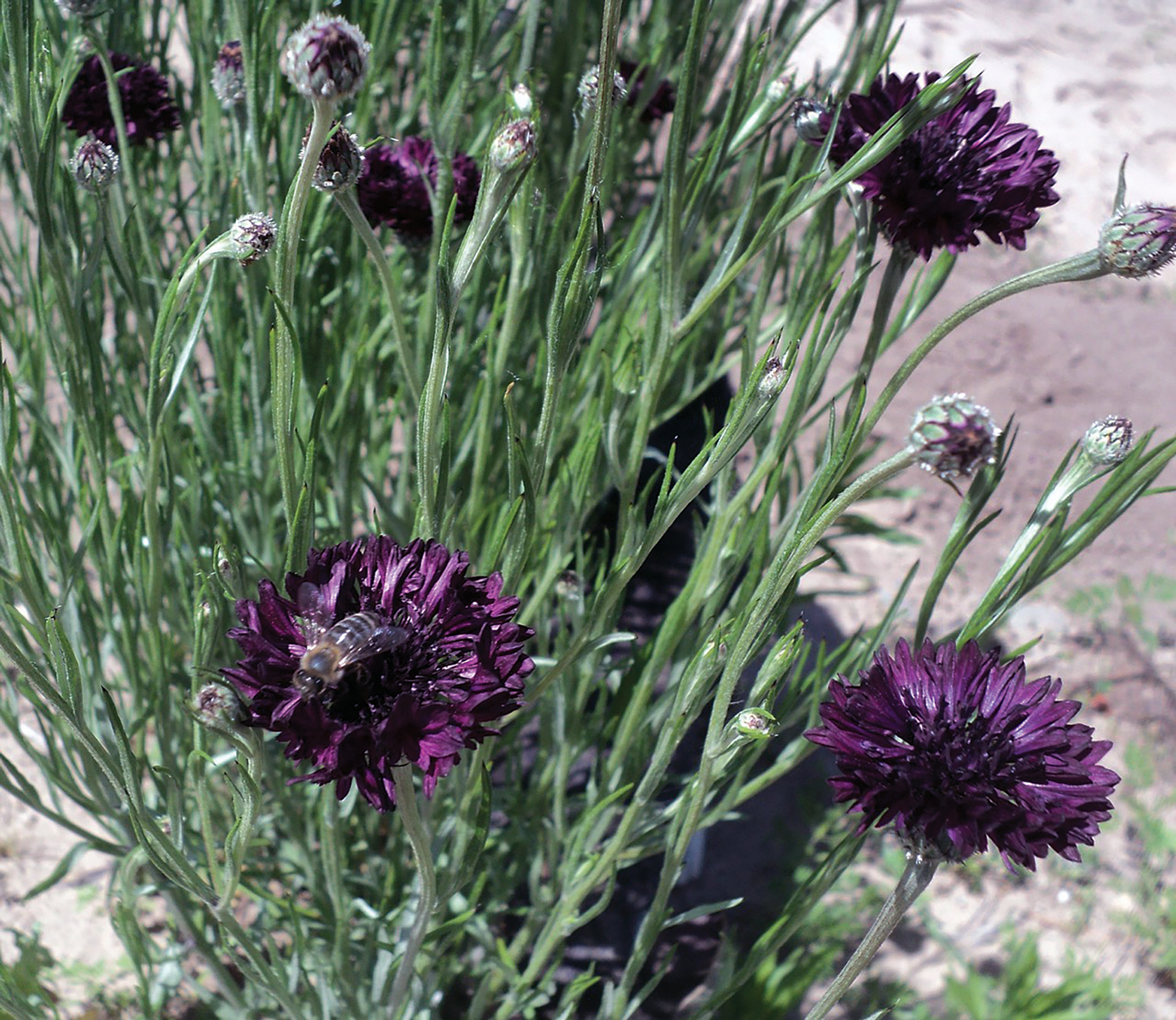
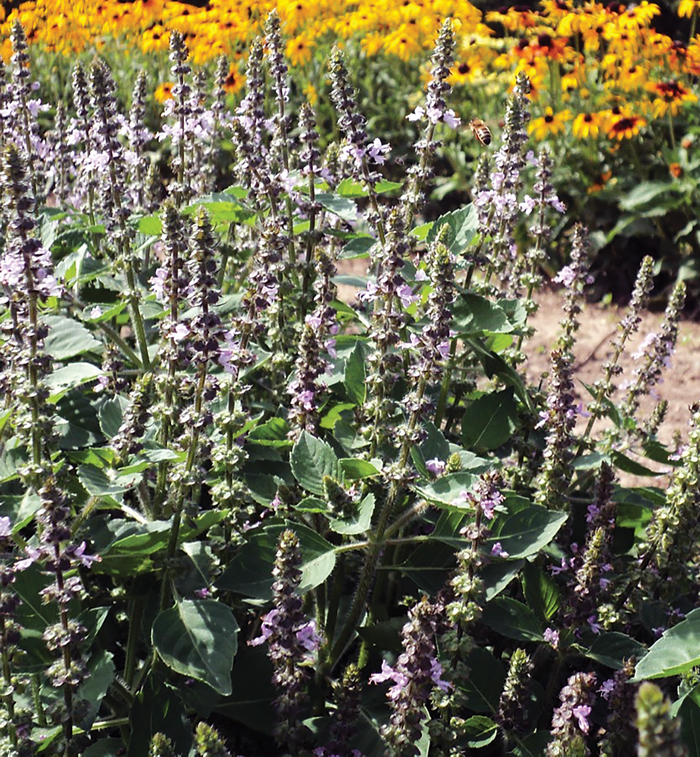
Annual (or temporary) insectary strips are intended to stay in place for one season only. They’re comprised of easily sourced, cheaply priced, frequently non-native annuals (both flowers and herbs). Commonly used plants include borage, buckwheat, cilantro, cornflower, cosmos, dill, dwarf sunflower, lacy phacelia, marigold, rudbeckia, runner bean, and tulsi. These strips can be kept for additional seasons; the use of self-seeding annuals and readily available herbaceous perennials add to their effectiveness for prolonged periods.
In contrast, permanent insectary strips are typically composed of native wildflowers, grasses, and herbaceous perennials (and even canes and shrubs) that take longer to establish and come with higher initial costs. Of course, once established, they’ll be in place for many years. Also, the use of native plants will better meet the needs of specialist bees, butterflies, and moths that have highly specific feeding requirements. The strips’ permanency (and the limited soil disturbance) offers nesting and overwintering locations that annual strips aren’t able to. Frequently used permanent strip plants include bee balm, blackberry, bluestem grass, chamomile, clover, elderberry, figwort, goldenrod, hawthorn, lemon balm, lobelia, mint, penstemon, wild rye, and yarrow.
Diversity is of great importance for insectary strip effectiveness. Mixtures that include plants from a variety of plant families, and therefore offer differing shelter from root systems, foliage, stems, and flowers of various sizes, shapes, and bloom periods, means that a myriad insects will be supported with food and shelter.
The other key to the success of strips is their placement. They should be located along field edges and periodically enter into fields themselves; an interconnected network of strips is ideal. Their close proximity to crops helps to that ensure maximum pollination and pest control benefits take place.
Calling All Beneficial Insects!
When selecting plants for insectary strips, a good approach is to consider the pests you wish to control and the beneficials that specifically control them. A few principal beneficial insects (followed by the pests they control) are:
- Fireflies — caterpillars, snails, slugs
- Ground Beetles — aphids, beetles (e.g., Colorado potato beetles), caterpillars, grasshoppers, insect eggs, snails, slugs (and even weed seeds!)
- Lacewings — aphids, mites, thrips, whiteflies
- Ladybugs — aphids, mites, scales, thrips, whiteflies
- Mantids — anything from aphids to grasshoppers (i.e., generalist eaters)
- Robber Flies — anything from lacewings to beetles (i.e., another generalist eater)
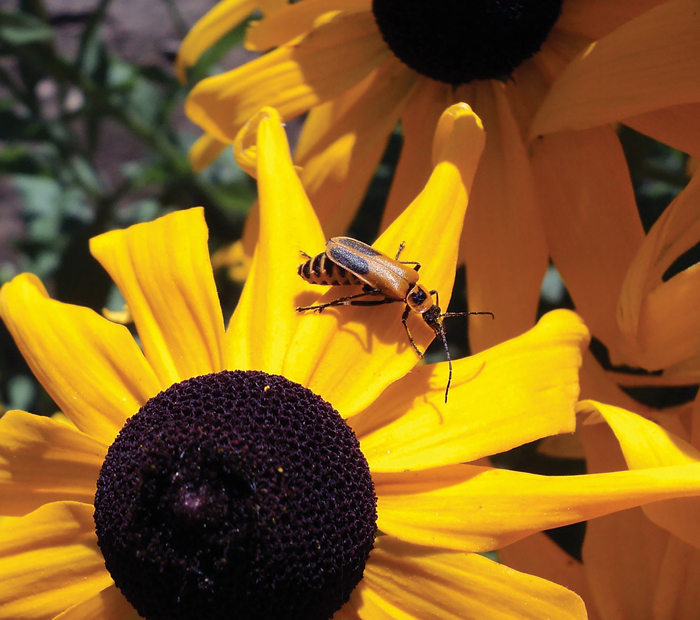
- Soldier Beetles (e.g., Pennsylvania leatherwings) — aphids, insect eggs, snails, slugs
- Syrphid (flower or hover-) Flies — aphids, mealybugs, scales, spider mites, thrips
- Tachinid Flies — beetles, caterpillars, earwigs, grasshoppers
- Wasps (parasitic and predatory) — aphids, beetles, caterpillars, grasshoppers
The next step is to note which plants attract which beneficials. Here are some plants and the insects that favor them. - Apiaceae Family (see below) — lacewings, ladybugs, robber flies, soldier beetles, syrphid flies, wasps
- Buckwheat — syrphid flies, wasps
- Chamomile — robber flies, syrphid flies, wasps
- Clover — wasps, lacewings, ladybugs, hoverflies, mantids
- Cornflower — lacewings, ladybugs, wasps
- Figwort — syrphid flies, wasps
- Goldenrod — ladybugs, wasps
- Lemon Balm — syrphid flies, tachinid flies, wasps
- Marigold — wasps, lacewings, ladybugs, hoverflies, mantids
- Mint — robber flies, syrphid flies, wasps
- Penstemon — ladybugs, syrphid flies
- Rudbeckia — ladybugs, soldier beetles, syrphid flies
- Dwarf Sunflower — fireflies, soldier beetles
- Yarrow — wasps, ladybugs, lacewings, damsel bugs, hoverflies, tachinid flies
Plants that Attract Predatory Insects
Some plants are so useful in insectary strips that they deserve special emphasis. For example, the Apiaceae family contains angelica, anise, caraway, chervil, cilantro, dill, fennel, lovage, parsley, and sea holly. These upright plants with umbel-shaped flower heads have numerous, shallow, readily accessible pollen and nectar sources to offer; they’re a preferred food source of many beneficial insects.
Also, plants with extrafloral nectaries (nectar sources not located within flowers but on vegetative plant parts) will support large populations of beneficials (including many parasitizing and predatory insects) due to this edible abundance. Cornflower, cowpea, elderberry, partridge pea, dwarf sunflower, and trumpet creeper (vine) are great options.
Lastly, some plants are doubly useful in that they provide excellent ground cover in addition to food sources; such plants are essential for overwintering in general but also to support terrestrial beneficials such as ground beetles. Try alyssum, alfalfa, mint, and the various thymes. Note that members of the mint family readily take over and should be planted with caution.
Successful Staging
To recognize the insectary strip ecosystem, it’s useful to understand the various predatory insect growth and eating habits. Some (like mantids) undergo incomplete metamorphosis with a consistent, predatory diet.
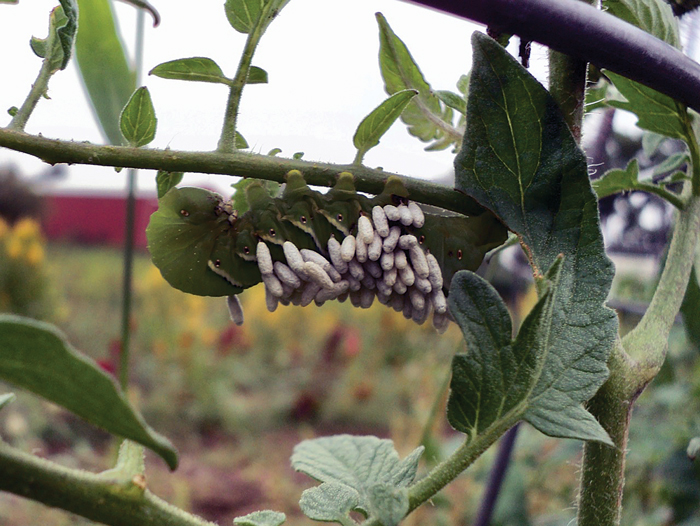
In cases of complete metamorphosis (and its more distinct stages), the adult stage is often most visible. Some adult diets consist of nectar and pollen — and sometimes the occasional insect pest. The immature larval stage of these beneficials’ growth is when insect garden pests are heavily consumed as food; this can happen when adults lay eggs on pests to feed their developing offspring (parasitism) or catch prey with which to feed their young (predation), and sometimes when the larvae catch prey themselves! So, you can see the importance of flowers even when predation is the goal. Soldier beetles, syrphid flies, tachinid flies, and wasps follow these growth patterns.
With ground beetles, both the larval and adult stages feed primarily on insect pests. Insectary strip plants function not as their food sources but to create the environment they prefer to inhabit and hunt in.
Diverse Defense
The most effective insectary strips will attract more than one insect to perform pollination and pest control services for a crop. For example, Pennsylvania leatherwings, ground beetles, robber flies, and wasps are all predators of the spotted cucumber beetle. By including plants to encourage the presence of them all, you increase the likelihood of successful biological control. A strip of alyssum, buckwheat, cornflower, cosmos, dill, and rudbeckia will be far more effective at controlling spotted cucumber beetle than one that only contains one or two plant species.
Furthermore, you should note that the previously mentioned close proximity of insectary strips to your target crops (and therefore target pests) is essential for the success of some beneficial insects. While large parasitic wasps and syrphid flies have high dispersion rates and will travel some distance to reach plants, small parasitic wasps, ladybugs, and ground beetles have low dispersion rates and seldom travel at all from right where they are. Regarding our example, you must get your leatherwings and ground beetles as close to the cucumber beetles as possible if you really want their help controlling them!
Leah Smith is a freelance writer and home and market gardener. She works on her family’s farm in mid-Michigan called Nodding Thistle (certified organic 1984-2009, principally by Organic Growers of Michigan). A graduate of Michigan State University, she can be reached at NoddingThistle@gmail.com.
Originally published in the January/February 2026 issue of Countryside and Small Stock Journal and regularly vetted for accuracy.